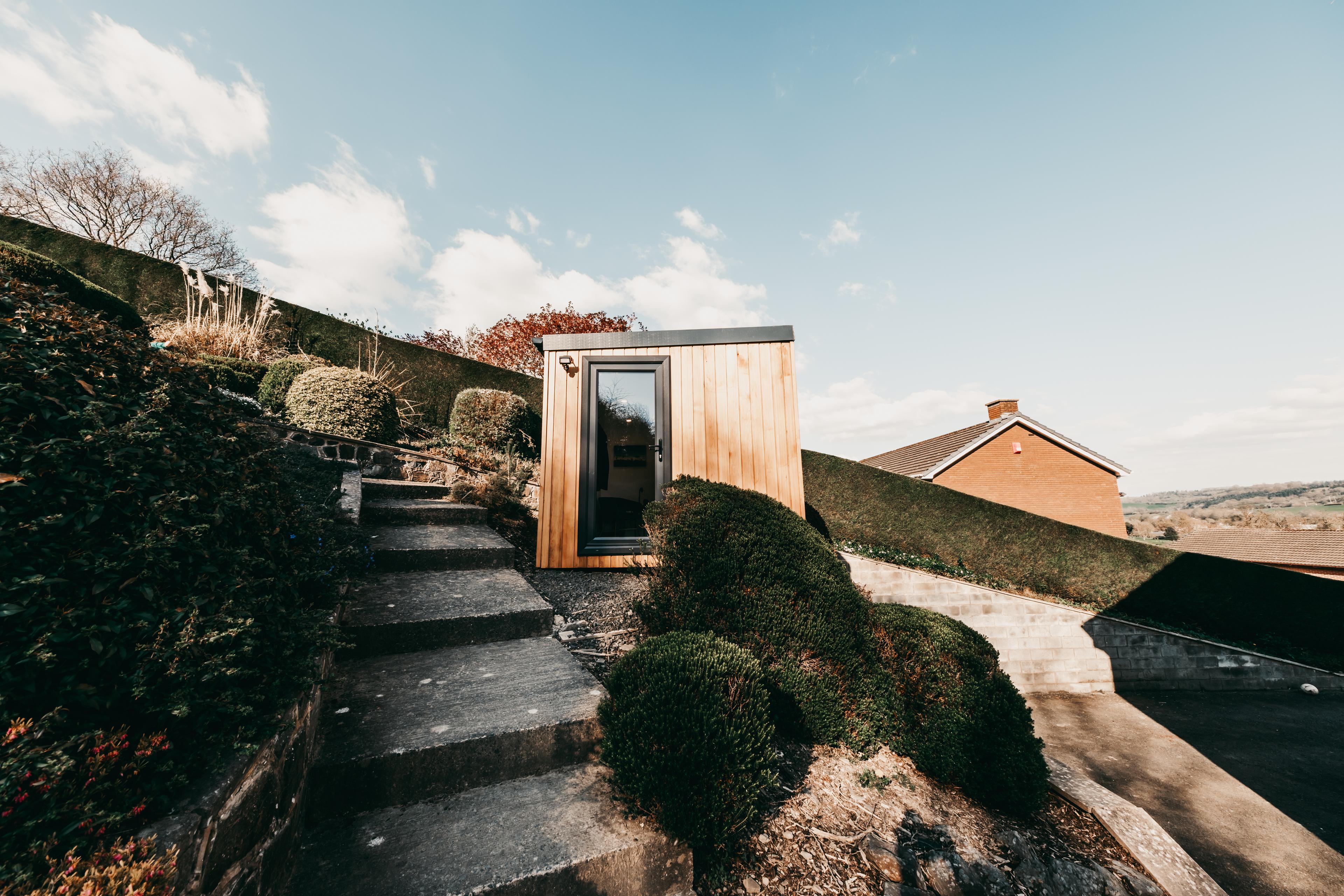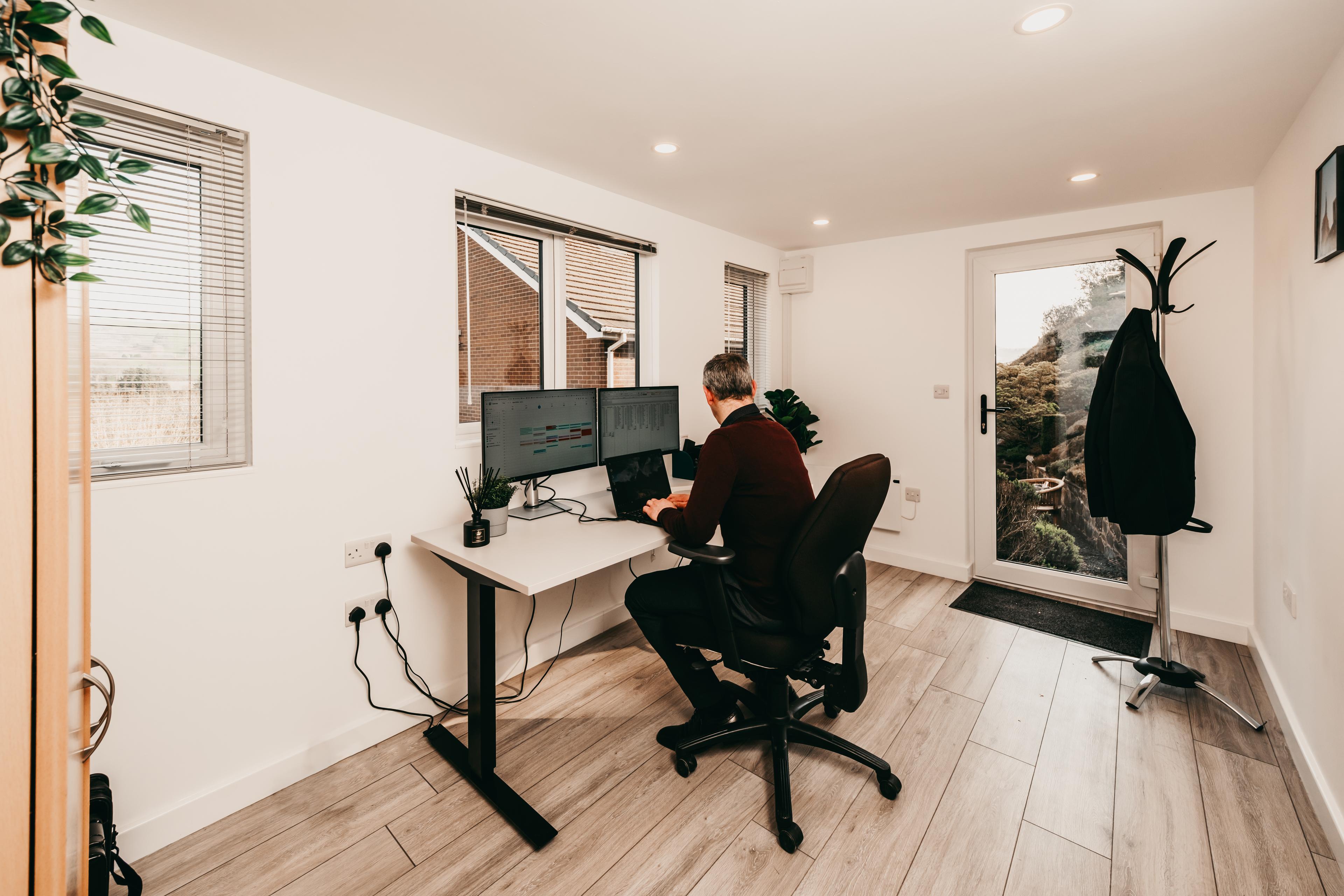
The base is one of the least glamorous decisions in a garden room project, and one of the most consequential. Get it wrong and you're dealing with a building that settles unevenly or a garden that's disrupted for weeks longer than it needed to be. Here's how the main options compare.
Why the Base Matters
Every garden room needs a level, stable, load-bearing surface to sit on. The base has to cope with the weight of the structure, resist ground movement over time, and — depending on the method — manage drainage underneath the building. It's usually decided at the design stage, alongside the size and layout of the room, because it affects both the installation timeline and how much disruption the garden takes on.
Ground Screws
Ground screws are galvanised steel posts wound into the ground using specialist machinery, providing point-load support at each corner and along the perimeter of the building, similar in principle to how a jetty or decking frame is often supported.
How they work
Screws are driven to depth and levelled, then a timber or steel sub-frame is built across the top to create a level platform for the garden room structure.
When they suit
- Sloping gardens — screws can be driven to different depths to create a level platform without needing to cut and fill the slope
- Sites with tree roots nearby — screws avoid the large-scale excavation a concrete slab needs, reducing the risk of root damage
- Limited access — the equipment used for ground screws is generally more compact than what's needed to pour and finish a concrete slab
- Speed — installation is typically much quicker than waiting for concrete to cure
- Drainage — because the ground beneath stays largely undisturbed and permeable, ground screws can suit sites where water needs to continue draining naturally
- Reversibility — screws can be removed relatively cleanly if the building is ever taken down, leaving less permanent disruption to the garden than a concrete slab
Concrete Base
A concrete slab is the traditional, familiar option — a reinforced concrete pad poured to the footprint of the building, providing a solid, permanent platform.
When it suits
- Very flat, accessible sites where excavation and access for concrete delivery aren't a constraint
- Sites without nearby trees where root disturbance isn't a concern
- Where a permanent, immovable base is preferred, for example for a heavier structure or where the building is intended to be permanent from the outset
Trade-offs
A concrete base takes longer to install because of excavation, formwork and curing time, generates more mess and spoil to remove from the garden, and is effectively permanent — removing it later, if the building is ever taken down, is a much bigger job than lifting ground screws.
Other Base Options
Paving slabs on a compacted sub-base, or a timber deck frame on ground pads, are sometimes used for lighter garden buildings, but they're less commonly suited to a bespoke, insulated garden room intended for regular year-round use, since they can be more prone to movement over time without the point-load stability of ground screws or the mass of a concrete slab.
Comparing the Two Main Options
| Ground Screws | Concrete Base | |
|---|---|---|
| Installation speed | Faster, typically a day or so | Slower — excavation plus curing time |
| Mess and spoil | Minimal | More significant — excavated material to remove |
| Sloping gardens | Well suited | Needs more groundwork to level |
| Near tree roots | Lower disturbance | Higher risk of root damage from excavation |
| Reversibility | Can be removed relatively cleanly | Effectively permanent |
| Site access needed | Generally more compact equipment | Concrete delivery/access needed |
What LouMil Does
Ground screws are a selectable option in our specification, and the right base for your project is agreed at the design stage based on your garden's slope, access, proximity to trees, and how the building will be used. We'll talk through what's achievable on your specific site rather than defaulting to one method — there's no single right answer that suits every garden. If you're ready to see how base choice fits into your overall specification, use our calculator to start pricing your project.
Frequently Asked Questions
Are ground screws better than a concrete base for a garden room?
Neither is universally better — it depends on your garden. Ground screws tend to suit sloping sites, gardens with nearby tree roots, and projects where speed and lower disruption matter, while a concrete base can suit flat, accessible sites where a permanent structure is preferred.
Can ground screws be used on a sloping garden?
Yes — ground screws can be driven to different depths and levelled off, which makes them well suited to sloping sites without the extensive cutting and filling a concrete slab would need.
Do ground screws damage nearby trees?
Ground screws generally disturb far less soil than the excavation needed for a concrete slab, which can reduce the risk to nearby tree roots, though the right approach still depends on the specific site and how close the trees are.
How is the base decided for a LouMil garden room?
The base is agreed at the design stage based on your garden's slope, access, proximity to trees and how the building will be used. Ground screws are one of the options available alongside a concrete base.