Cladding does more than decorate a garden room — it's the first line of weather protection and the biggest factor in how much upkeep the building will need over the years. Choosing between timber and composite is one of the earliest decisions in the design process, so it's worth understanding the trade-offs before you commit.
Timber Shiplap (Standard)
Timber shiplap is our standard cladding — horizontal, overlapping timber boards that give a garden room a warm, traditional appearance that suits most gardens and blends well with existing planting and fencing.
Looks
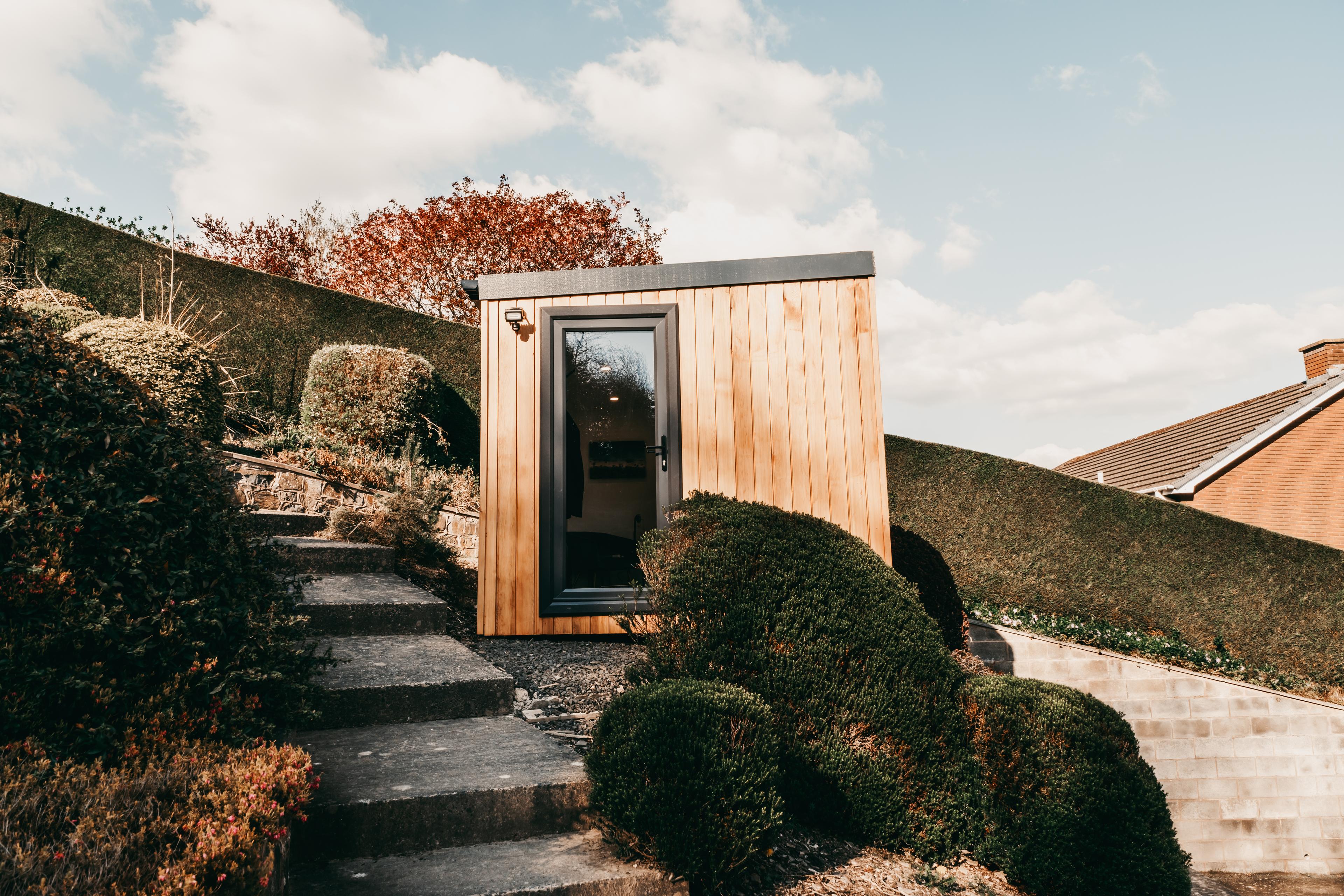
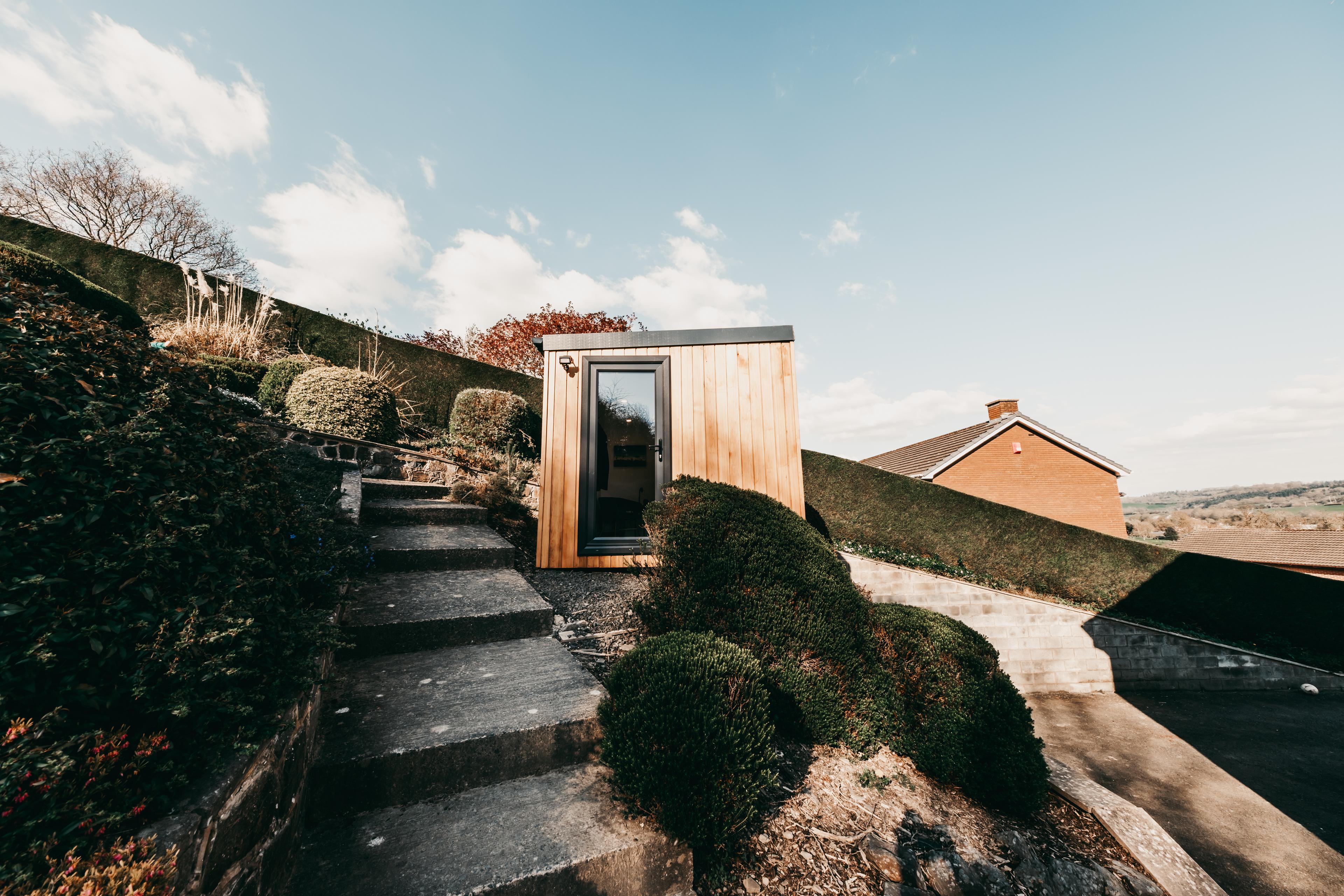
Natural wood grain and a classic horizontal board profile — the look most people picture when they think of a garden building.
Maintenance
Timber cladding benefits from periodic treatment (staining or painting) to protect it from the weather and keep its appearance fresh. How often depends on the finish, orientation and local exposure, but it's an ongoing commitment rather than a one-off.
Weathering
Left untreated, timber will silver and weather naturally over time — which some people like the look of, but it does change the appearance from the day it was installed.
Composite Cladding (Upgrade)
Composite cladding is a paid upgrade option, made from a blend of wood fibre and recycled plastics, engineered to resist rot, fading and warping better than solid timber.
Looks
Composite is available in a range of finishes and colours — from natural wood-effect tones to bolder anthracite and black options — giving a more contemporary appearance if that suits your design. Our Derby garden room uses a slatted oak-effect composite finish, and our Leicester L-shaped annexe uses a slatted anthracite composite for a bolder, contemporary look.
Maintenance
Composite generally needs very little ongoing maintenance compared with timber — no regular staining or painting — which is the main reason people choose to pay more for it upfront.
Weathering
Composite is engineered to hold its colour and finish more consistently over time than untreated timber, though like any exterior material its long-term appearance still depends on quality, installation and exposure.
Cost direction
Composite costs more upfront than standard timber shiplap — it's a specification option you add and price through the calculator rather than a default inclusion — but the lower maintenance requirement is the trade-off for that higher initial cost.
Slatted Composite
A variation on composite cladding, slatted composite uses vertical or horizontal battens with visible gaps rather than a flush overlapping board, giving a more architectural, contemporary appearance. Our garden room with shower and office and our Stourport bar and entertainment room both use slatted composite cladding to striking effect — the Stourport build combines a light grey slatted composite front elevation with anthracite metal sheeting to the remaining sides for a bold, contemporary contrast.
What Suits Which Setting
- Traditional or cottage-style gardens: timber shiplap generally sits more naturally alongside existing fencing, hedging and older properties
- Contemporary homes and gardens: composite, especially in anthracite or black, tends to complement modern architecture and clean landscaping
- Low-maintenance priorities: if you don't want an annual treatment job, composite is the more practical long-term choice despite the higher initial cost
- Statement or commercial builds: slatted composite and mixed-material combinations (as seen in our Long Meadow Pet Resort reception, which combines wood-effect composite cladding with a cedar-clad canopy) suit projects where the building itself is meant to make an impression
Colour Options
Both timber and composite are available in a range of finishes — timber can be stained or painted in most colours, while composite ranges typically span natural wood-effect tones through to greys, anthracite and black. Exact colour availability depends on the supplier ranges current at the time you specify your build, so it's worth confirming current options when you're speccing your project rather than assuming a particular shade will always be available.
Choosing for Your Project
Cladding is a specification choice you make as part of building your garden room through our calculator — timber shiplap as the standard inclusion, with composite (including slatted composite) available as an upgrade. Browsing our portfolio is a good way to see how each finish actually looks once installed, rather than judging from a swatch alone.
Frequently Asked Questions
Is composite cladding better than timber for a garden room?
It depends on your priorities. Composite costs more upfront but needs less ongoing maintenance and tends to hold its colour and finish more consistently over time. Timber shiplap costs less initially and gives a more traditional look, but needs periodic treatment.
Does composite cladding come in different colours?
Yes — composite ranges typically span natural wood-effect tones through to greys, anthracite and black, giving a lot of flexibility to match a contemporary or bold design. Confirm current colour availability when you specify your build.
What is slatted composite cladding?
Slatted composite uses vertical or horizontal battens with visible gaps rather than a flush board, giving a more architectural, contemporary look. It's used on several LouMil builds including our Stourport bar and entertainment room and our garden room with shower and office.
Is timber cladding included as standard?
Yes — timber shiplap is the standard cladding on a LouMil garden room. Composite, including slatted composite, is available as a specification upgrade priced through the calculator.